Saginaw sits in a cold, severe climate band, and that matters more for panels than people expect. Steel contracts in deep cold, and a door panel that's already got a stress point - an old dent, a hairline crack, a weak seam - is more likely to fail outright once temperatures swing hard through a winter freeze-thaw cycle. That's a different failure pattern than a warm-climate market ever sees.
Age compounds it. With most of the area's housing built between 1952 and 1994 (median right around 1970) and concentrated in 1960s-70s stock across the 21 named areas we cover, a lot of original garage doors are still on the house, or were replaced once decades ago with a similar-era model. Steel gauge on those older doors tends to be thinner than what's sold today, and thinner steel dents deeper and cracks sooner in cold weather.
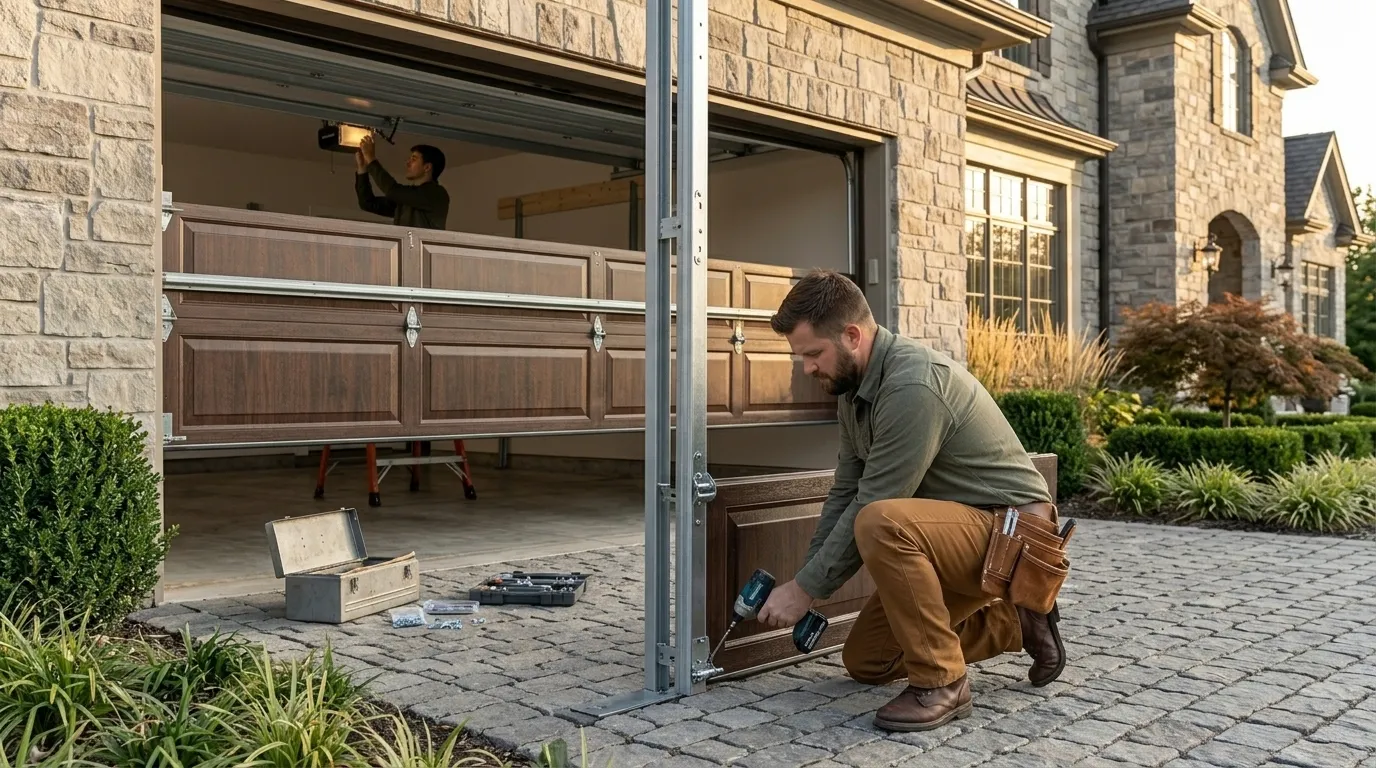
The combination - older, thinner panels and a real winter - is why panel replacement shows up as a steady call here instead of an occasional one. It's not that Saginaw drivers hit more garage doors than anywhere else; it's that the doors already standing here are more likely to be at the point where a hit becomes a crack instead of just a dent.