
1952-1994 standard cable kit coverage
We carry these because they cover most of what's still installed across the wider Saginaw area, where the bulk of the housing dates to the 1952-1994 range and a large share of it sits in that 1960s-70s window.
Shields, Saginaw
Cable repair for Shields, MI homes built around 1976, where extension-spring lift systems on steel sectional doors are still the norm. Serviced from Saginaw, 6 miles out.
Booking
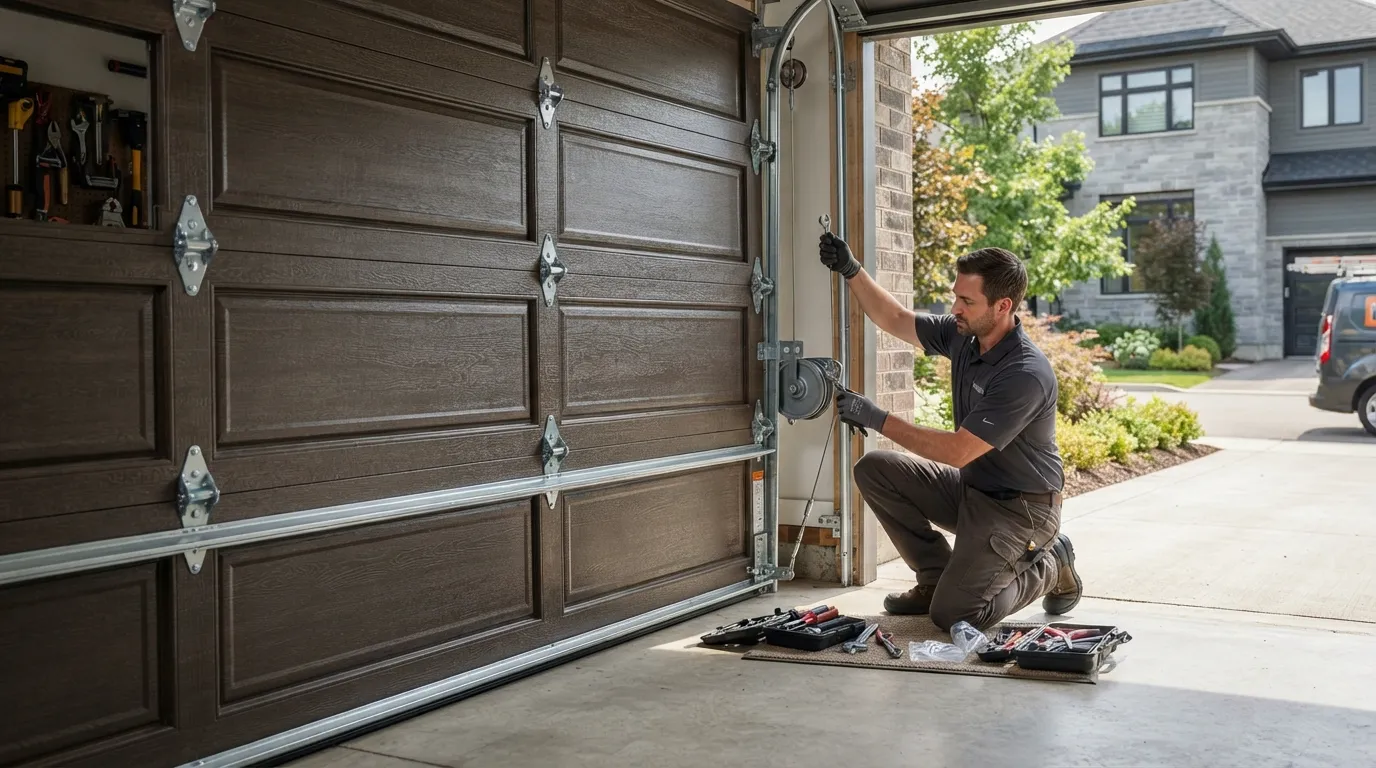
We run this job out of Saginaw, six miles from Shields, so there's no local branch to call and we won't pretend otherwise. What that distance does mean is the truck isn't crossing town from some other job first - Shields is close enough that a cable repair here fits easily into a normal day's route.
When you call, tell us what the door is doing: hanging crooked on one side, a cable visibly frayed or wound around the drum wrong, or a door that won't budge because a cable snapped and the opener is fighting a stuck panel. That detail changes what we bring off the truck.
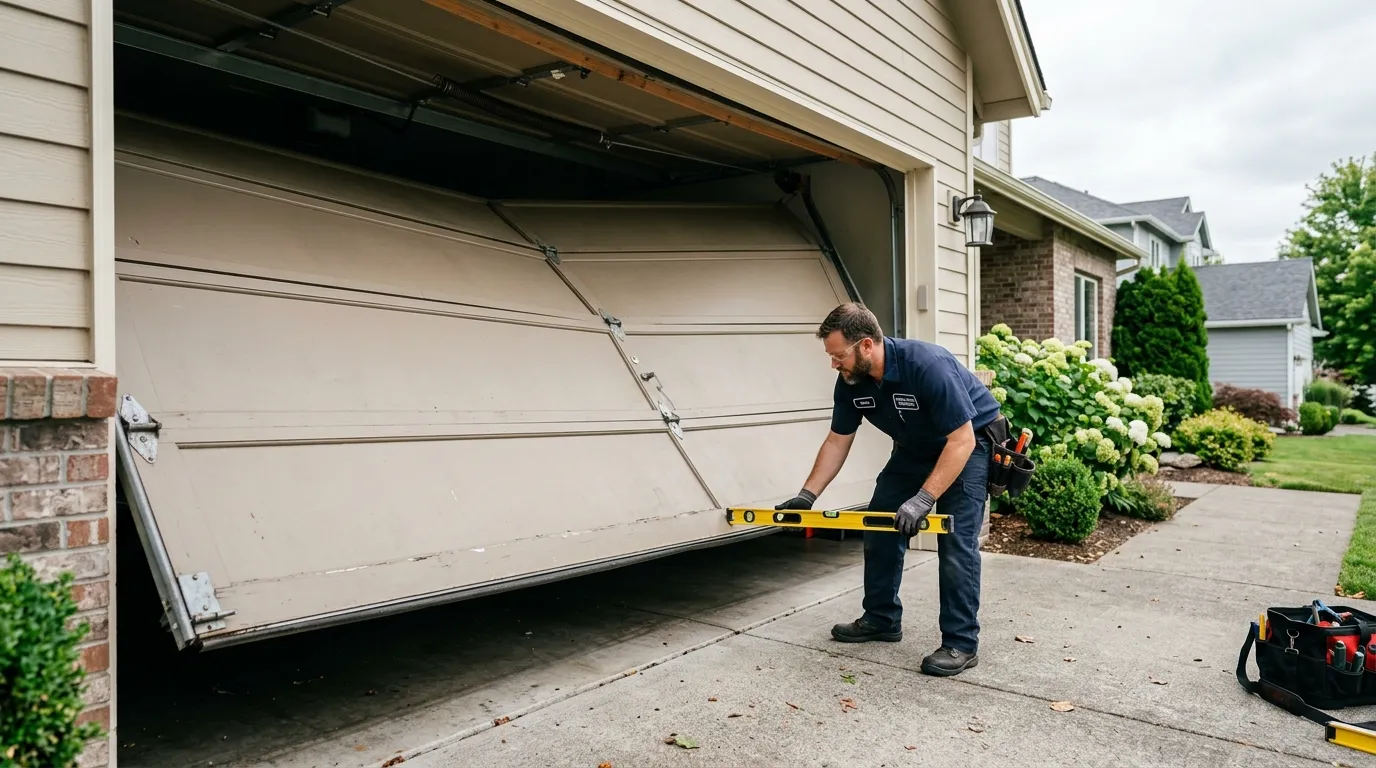
A single snapped lift cable on a door that's otherwise sound is a different job than a cable that let go and let the door drop, which can bend track or crack a panel on the way down. We don't quote a fixed response window for Shields specifically - that's not a number we have, and we're not going to invent one just to sound faster.
What we can tell you is that the trip out is short, and once we're on site, cable jobs on standard residential doors are usually same-visit work, parts allowing. See our Shields page for the rest of what we cover in the area, or the main cable repair page for Saginaw if you want the broader service details.
Local causes
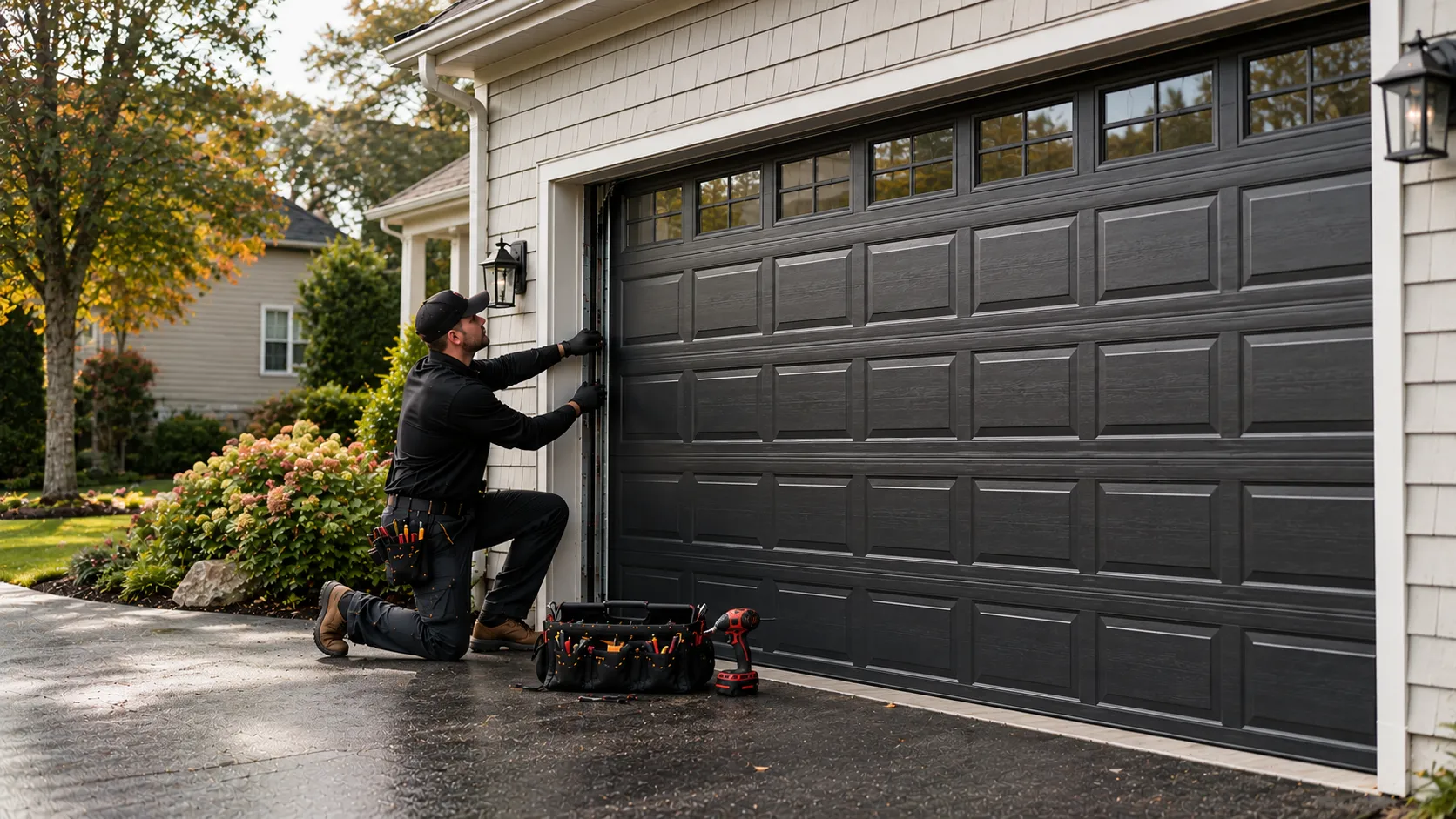
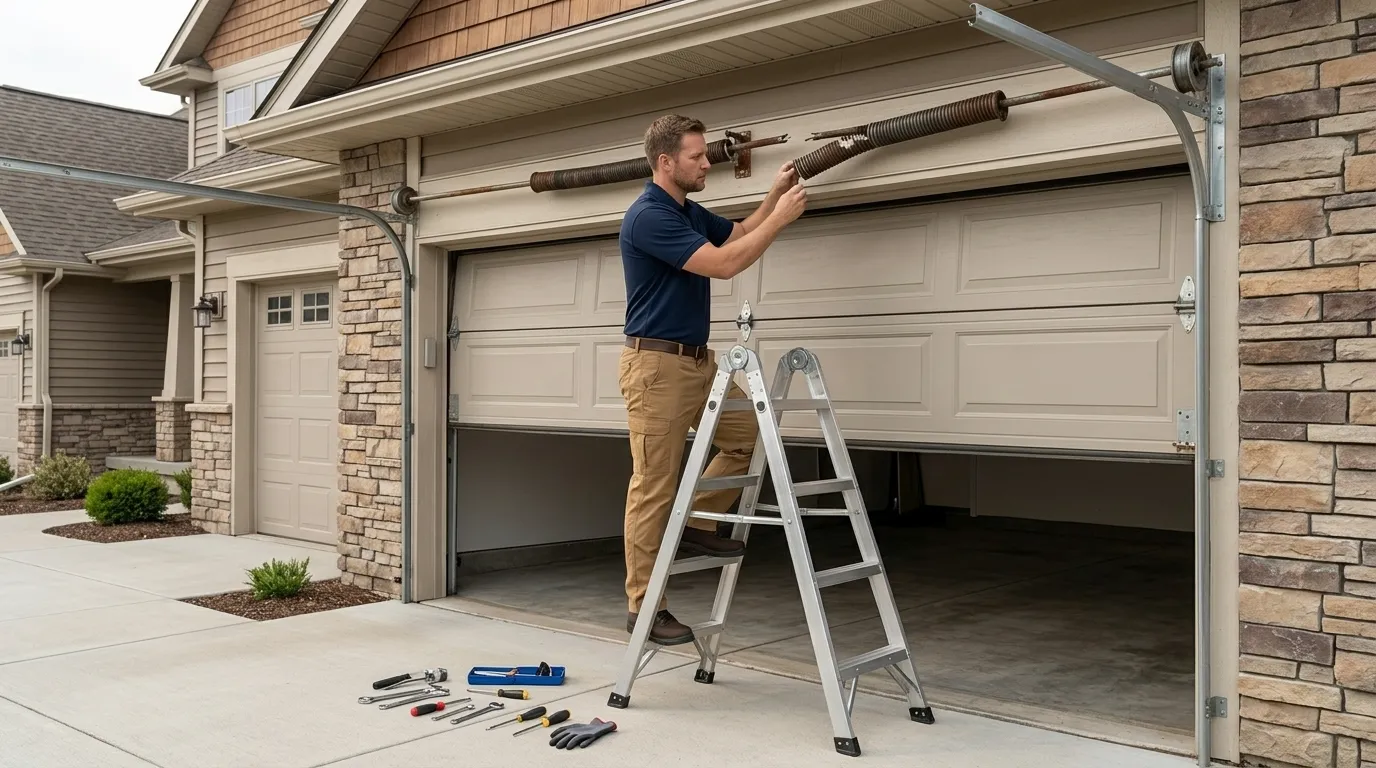
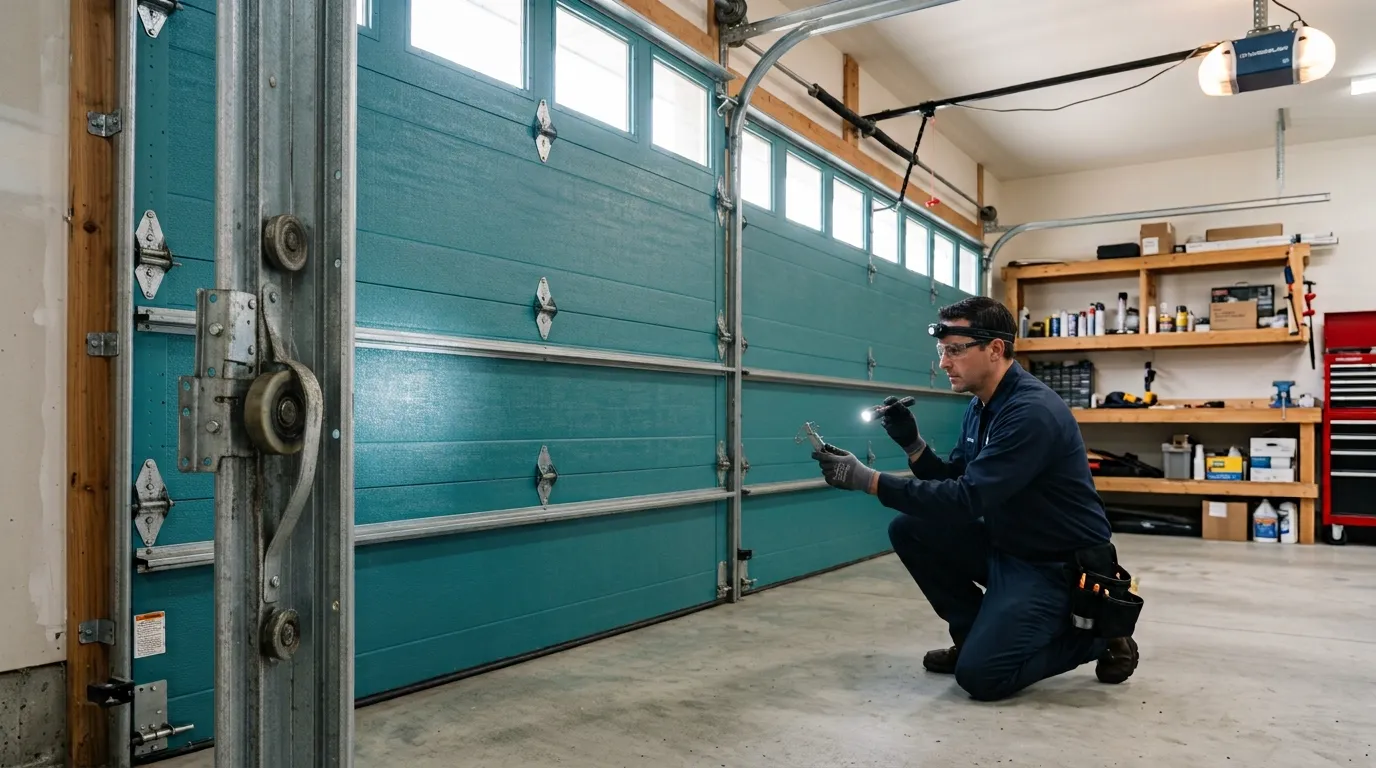
Shields' housing stock centers on 1976, which puts most garages here squarely in the era when builders spec'd extension-spring lift systems on steel sectional doors - springs stretched along horizontal tracks above the door, connected to lift cables running down to the bottom corners. It was the standard, cheaper setup of that decade, and a lot of it is still in place, original or close to it.
Those cables take a beating in this climate. Winters here run cold enough that galvanized cable strands stiffen and lose flex, and every freeze-thaw cycle works at whatever fraying has already started at the drum or the bottom bracket. Add fifty years of daily use - one open-close cycle wearing the same six inches of cable against the same pulley - and you get the failure pattern we see most in Shields: a cable that frays at a fixed contact point long before the rest of it looks worn.
The other thing this era brings is corrosion at the bottom fixture, where the cable clamps to the door. Moisture sits there, and once a strand or two goes, the rest follow fast under load. It's rarely one clean snap - usually a slow give that finally lets go on an ordinary morning.
On the truck
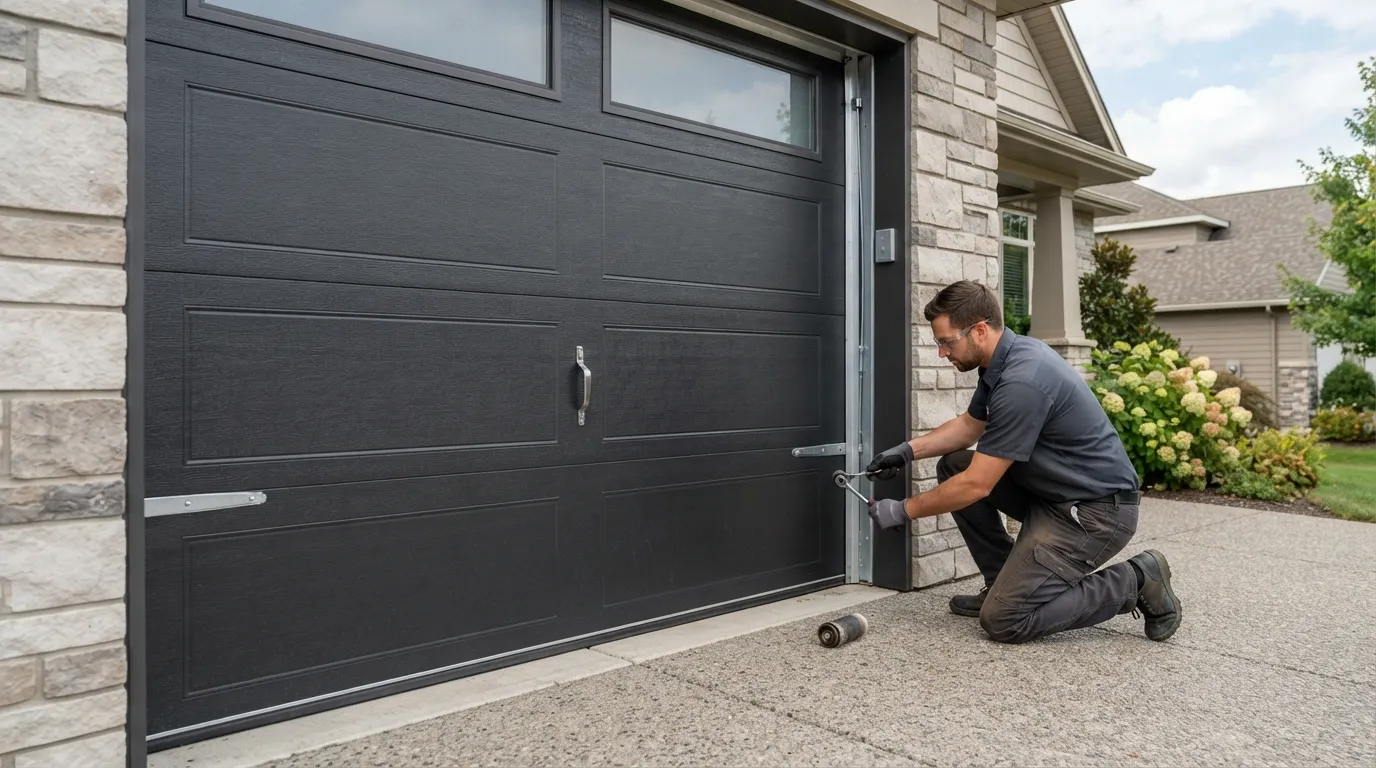
For a house built around 1976 with the standard extension-spring setup, the parts on the truck are aircraft cable in the common residential gauges, replacement safety cables (the ones that run through the spring itself, separate from the lift cable - a lot of older installs never had one), drums, and the bottom brackets the cable clamps to.
We carry these because they cover most of what's still installed across the wider Saginaw area, where the bulk of the housing dates to the 1952-1994 range and a large share of it sits in that 1960s-70s window.
Shields fits that pattern closely enough that a standard cable kit resolves most calls without a special order. What we don't stock on the truck is anything custom - a nonstandard drum size from an odd or aftermarket door, or hardware for a torsion conversion someone had done later.
If a door's been modified from its original setup, we may need to order a part, and we'll say so on site rather than guess and come back twice. That's the one limitation worth stating plainly: original hardware, we're usually equipped for it same-visit; modified hardware sometimes means a return trip.
Pricing
We're not going to put a number on this page that isn't backed by a real quote, and cable repair pricing depends on things we can't see from here - whether it's one cable or two, whether the drum or bottom bracket also needs replacing, and whether the spring itself is still good or went with the cable.
What we can tell you is what drives the cost up or down once we're looking at the door. A single frayed cable caught before it snaps, on a door that's still tracking straight, is the simplest version of this job.
A cable that snapped and let the door drop unevenly is a bigger job, because we're also checking the track, rollers, and panel for damage from the drop - and sometimes replacing more than the cable.
Households in Shields report a median income of $83,986, notably above the $68,935 median across the wider Saginaw service area, but that has no bearing on what we charge - the price is set by the door and the parts, not the zip code. We quote after we've seen the actual hardware, not before.
Questions
Because most homes here date to around 1976, when extension-spring lift systems were the standard, lower-cost setup on steel sectional garage doors. Torsion springs existed then but weren't universal on production housing. A lot of that original hardware is still running, which is why extension-spring cable failures are the most common call we get in Shields.
If the door dropped and is sitting crooked or partway down, don't force it open or closed - the cable on the other side can still be under load and let go too. It's not always an emergency in the sense of needing to happen that hour, but the door shouldn't be operated until it's fixed.
For original 1970s-era hardware, yes - standard aircraft cable, drums, and bottom brackets are stocked because that setup is common across the wider Saginaw area. If a door's been modified with nonstandard parts, we may need to order something and will tell you on site.
Explore more
Ready when you are
Saginaw Garage Door Pros repairs and installs garage doors, springs and openers in Saginaw, MI and the surrounding area.