
Guide
Weather Seals and Draughts in Saginaw Garage Doors
Saginaw homes built mostly in the 1960s-70s lose heat through worn garage door seals. Here's what cold-climate weatherstripping actually costs and fixes here.
Local detail
The Cost of This Job
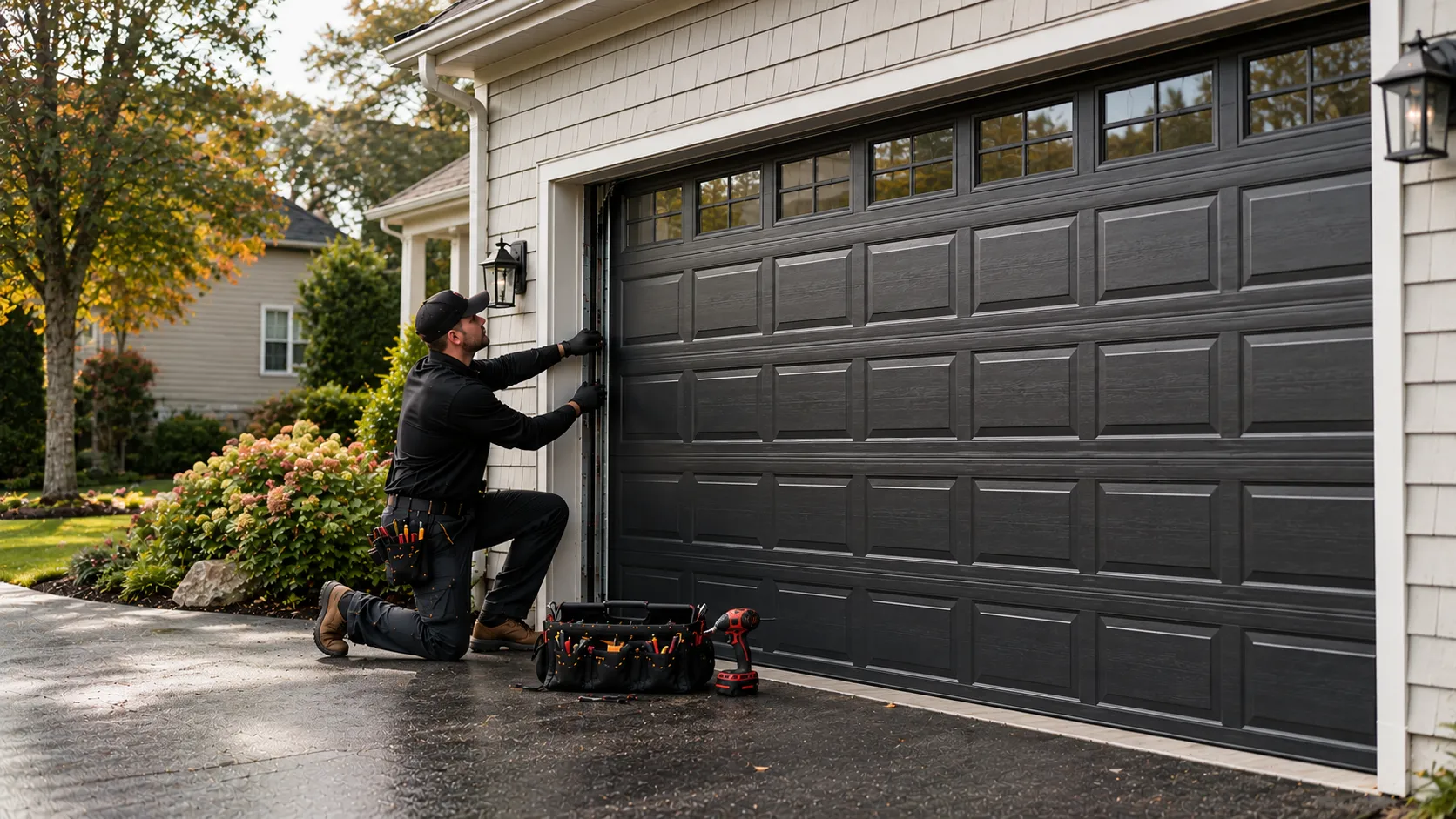
We don't have a set price to quote you here, and we're not going to make one up. What we can tell you is what drives the cost on a typical Saginaw job: the door width (single or double), whether the bottom astragal seal needs replacing along with the side and top perimeter seal, and whether the old track has rusted enough that the seal won't sit flush anymore. Houses built in the 1952 to 1994 window that makes up most of this area's stock (median year 1970) usually have steel doors with a single vinyl bottom seal and thin foam side stops - both wear out faster in a cold climate than in milder ones. If your door is original to a house from that era, expect to replace more than just the bottom seal; the side channels have usually deformed too. We'll give you a real number after we look at the door, not before.
One honest limit: if the door panel itself is warped from decades of temperature swings, a new seal won't fix the draught. At that point you're looking at panel or door replacement, and we'll tell you that straight rather than sell you a seal kit that won't hold.
The area
The Situation
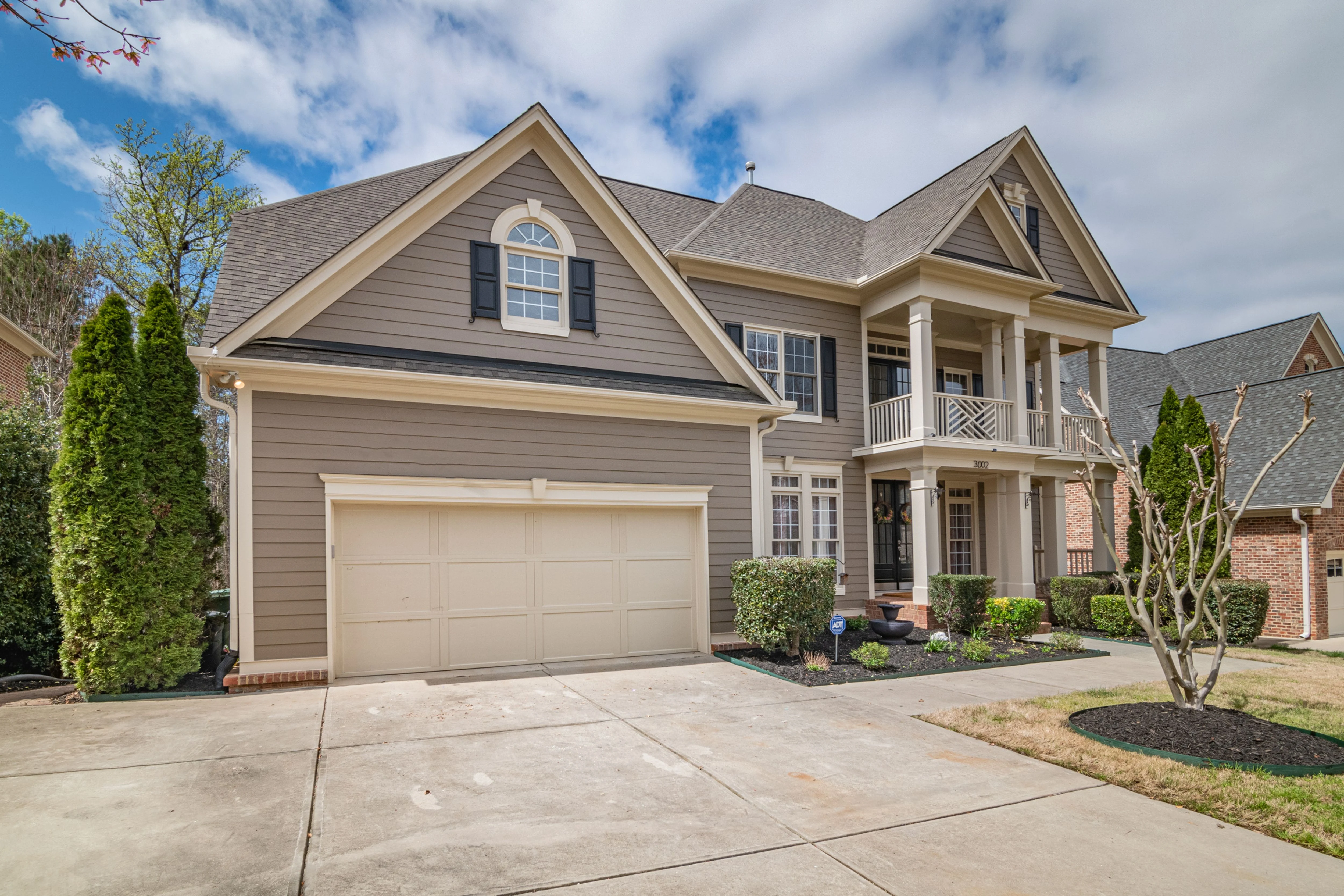
Most of the housing across this service area - 27,378 households, with 16,915 owner-occupied houses - went up between 1952 and 1994, and the bulk of it clusters in the 1960s and 70s across the 21 named areas we work in, from Buena Vista and Zilwaukee close in to Freeland, Frankenmuth, and Birch Run further out. Garage doors from that period were built for a different set of expectations than what a cold-climate winter puts on them today. The steel is thinner, the original seals are long gone or brittle, and the track hardware was never designed with insulation in mind.
Saginaw sits in a severe cold climate band, and a garage that shares a wall with the house - common in homes of this vintage - turns into a direct path for outside air once the seals fail. That's not a defect specific to any one house; it's what forty to seventy years of freeze-thaw cycling does to rubber and foam on a door built before insulated garage doors were standard.
What we find
What Local Conditions Do
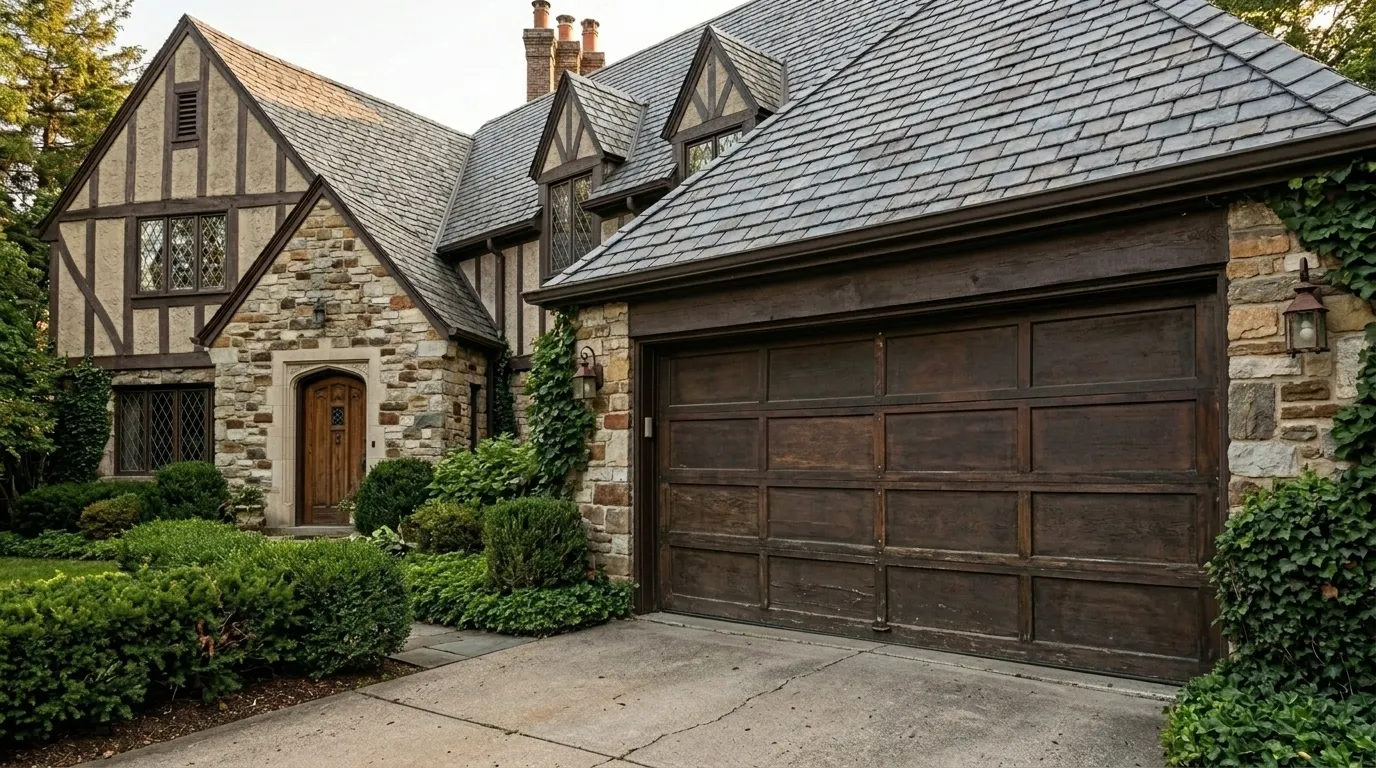
Cold-climate severe means real temperature swings across a winter, and that's what breaks down weatherstripping faster than almost anything else. The bottom seal takes the worst of it: it sits against a concrete slab that's often below freezing for weeks, while the garage air above it swings with every door cycle. Vinyl seals from the 1960s-70s stock common here weren't formulated for that kind of repeated flex in the cold - they crack, shrink, and pull away from the aluminum retainer instead of staying compressed against the slab.
Side and top seals fail differently. Wood jambs on houses from this era shift slightly with frost heave under the slab, which opens gaps that no amount of seal replacement closes on its own - the jamb itself needs to be checked and sometimes reset. We see this most in houses that never had the door re-sealed since it was built, which given a median construction year of 1970, is a lot of doors.
How we work
Where People Go Wrong
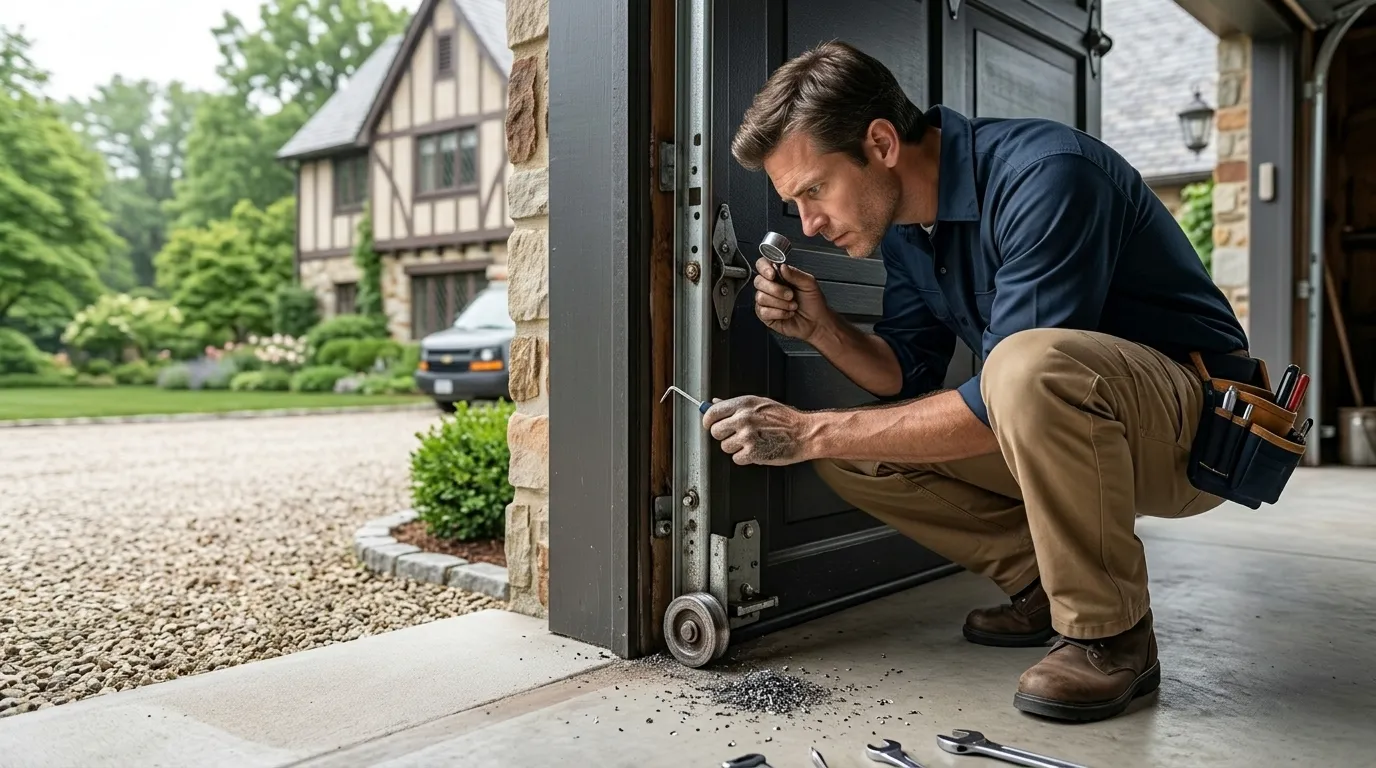
The most common mistake we see is someone buying a universal bottom seal at a hardware store and jamming it into a track that's already rusted or bent out of true. It looks sealed for a season, then the draught comes back because the seal never sat flat to begin with. On houses from the 1952-1994 stock, the retainer track itself is often the real problem, not just the rubber.
The second mistake is only replacing the bottom seal and skipping the sides and top. In a severe cold climate, air finds the gap you didn't fix - if the bottom is tight but the side stop is flattened, the draught just moves. We tell people to have all four sides checked at once, because in this climate a partial seal job means doing the work twice.
The third: assuming a draught is always a seal problem. Sometimes it's a warped panel or a door that's out of square on its track, and no amount of new weatherstripping fixes either of those.
Questions
Common questions
How old does a garage door seal usually get before it needs replacing here?
There's no fixed lifespan we can quote without inspecting it, but on houses from the 1952-1994 stock common across this area, original or long-unreplaced seals are usually cracked or shrunk by the time we're called, especially on the bottom astragal, which takes the most direct exposure to slab temperature.
Will new weatherstripping fix a draughty garage in Saginaw's winter?
Often, yes, if the track and panel are still straight. But in a severe cold climate, frost heave can shift the jamb slightly on older houses, and a new seal against a shifted jamb won't seal fully. We check the jamb and track before quoting seal work.
Is it worth sealing an old door instead of replacing it?
Depends on the panel condition. If the steel is straight and the track is sound, sealing is the cheaper first step. If the panel is visibly warped from decades of temperature swings, a seal kit won't stop the draught and replacement is the better use of your money.
Ready when you are
Need a garage door sorted in Saginaw?
Saginaw Garage Door Pros repairs and installs garage doors, springs and openers in Saginaw, MI and the surrounding area.