
Guide
Is Your Old Saginaw Garage Door Worth Fixing?
Saginaw's housing stock runs 1952-1994, mostly 1960s-70s. Here's how that age and our cold climate decide whether a door is worth repairing.
Local detail
The Cost of This Job
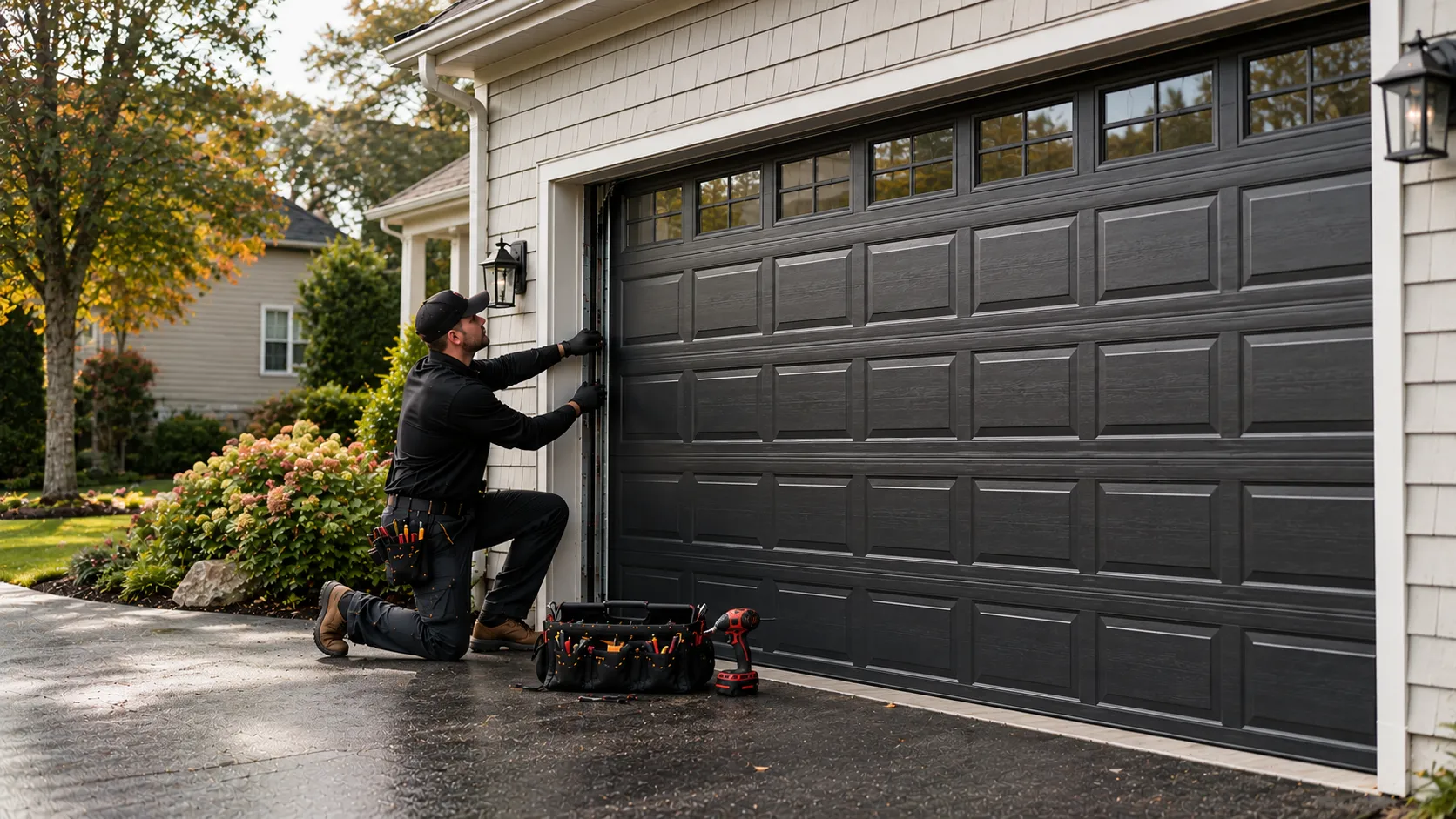
We can't quote you a number without seeing the door, and any page that promises one without a truck in your driveway is guessing. What we can tell you is what drives the number up or down. A torsion spring swap on a door from the 1960s or 70s costs less than replacing a whole section, because the section has to match panel style and track width that newer stock doors don't carry. Saginaw's housing stock runs 1952 through 1994, with the median build year around 1970, so a lot of doors we look at are original or close to it - which means the hardware is often non-standard by today's parts bins.
That raises labor time even when the part itself is simple. If your opener is original too, the motor and the door often fail close together, and fixing both at once usually costs less per job than two separate service calls months apart. Ask for the breakdown - spring, cable, roller, panel, opener - before you agree to anything, and get it in writing.
The area
The Situation
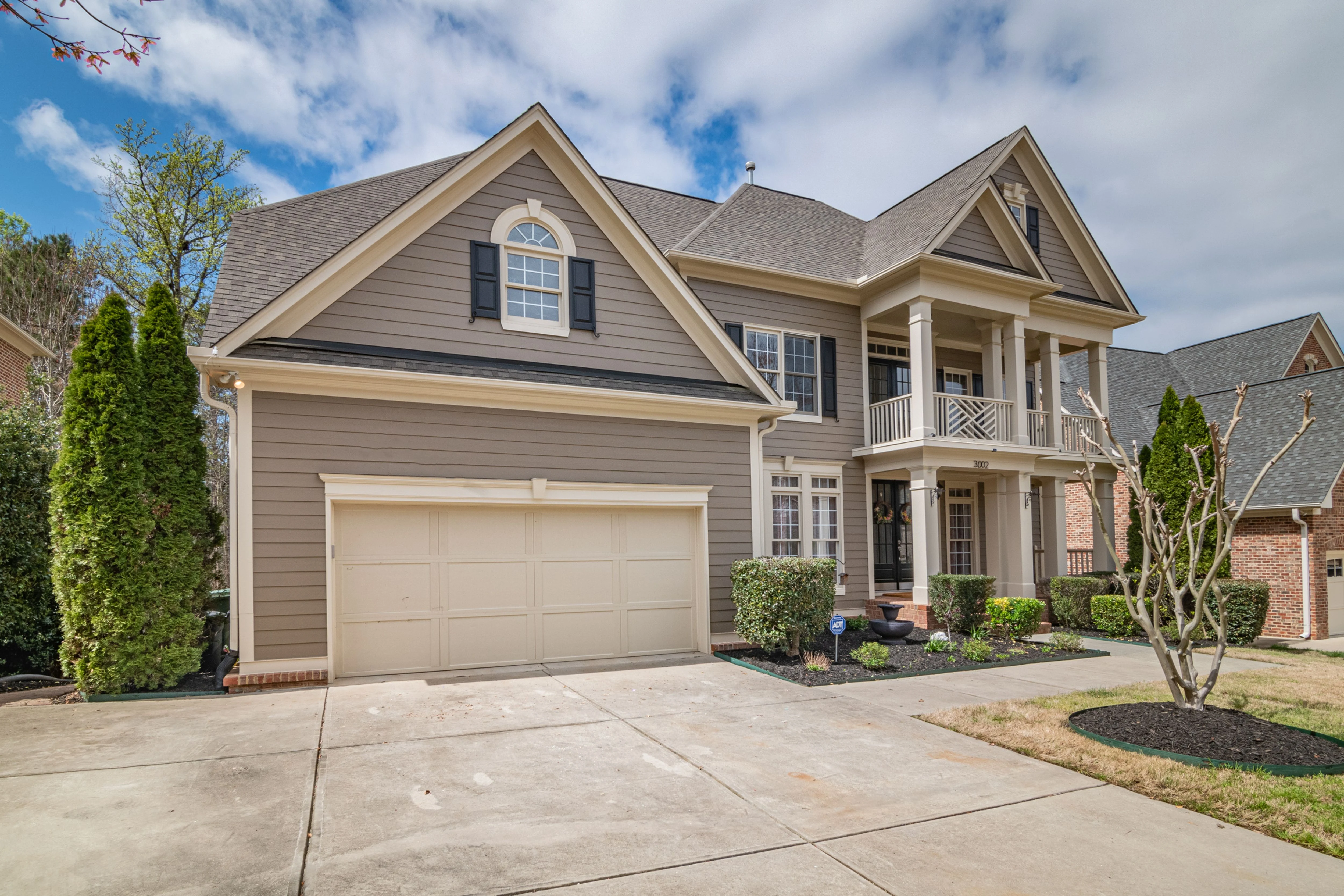
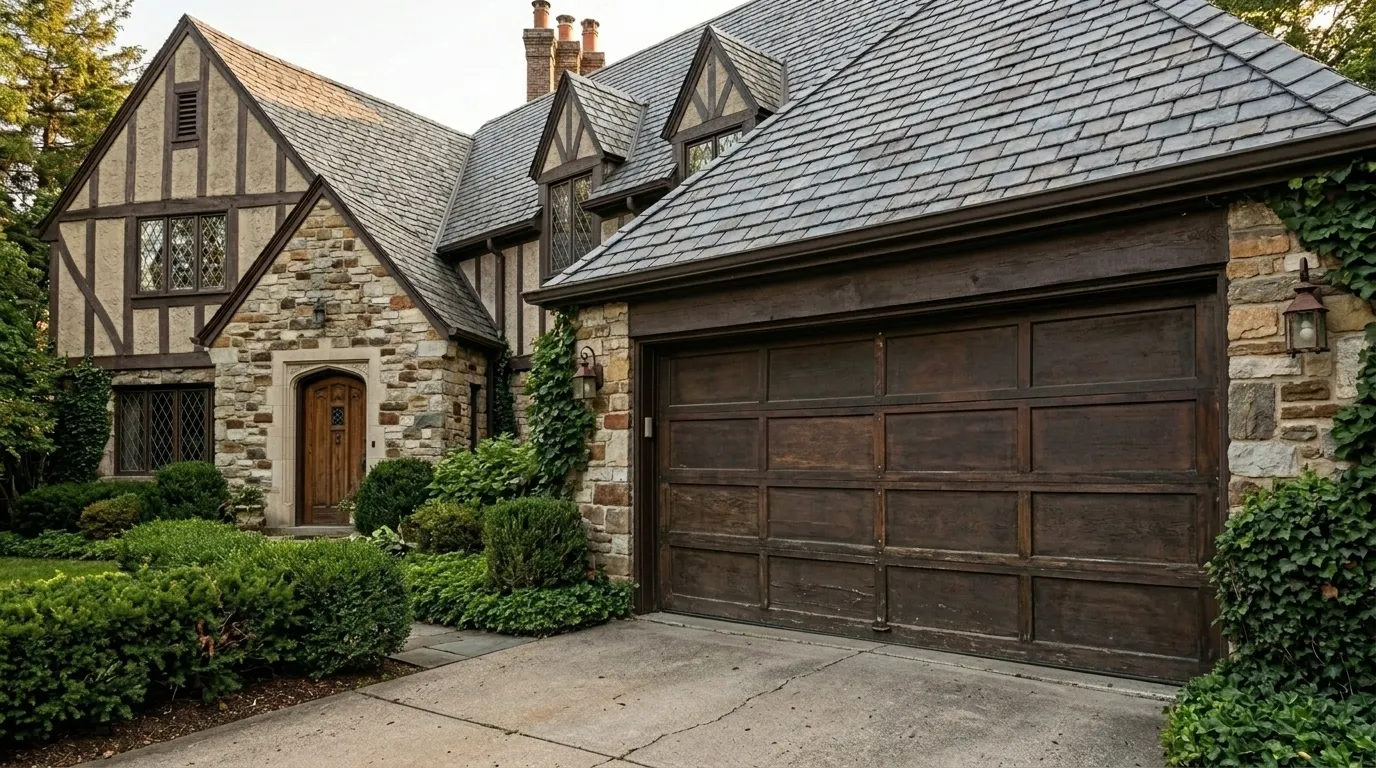
Most of the doors we get called on across Saginaw and the surrounding areas - Buena Vista, Zilwaukee, Bridgeport, Shields - sit on houses built in that 1960s-70s window that makes up the bulk of the local stock. That means original one-piece or early sectional doors, steel tracks that have seen fifty-plus winters, and torsion springs nobody has serviced since the Nixon administration. A door that age isn't automatically junk. Steel holds up better than the springs and cables around it, and a lot of what looks like a dying door is really a spring at the end of its cycle count or a track that's racked out of square from decades of temperature swings.
The question isn't how old the door is. It's whether the panel steel is still straight and rust-free, and whether the opener - if there is one - is original or already replaced once. We see plenty of doors from this era that are worth another ten years of service with the right repair, and just as many where the steel itself has given out and no amount of spring work fixes that.
What we find
What Local Conditions Do
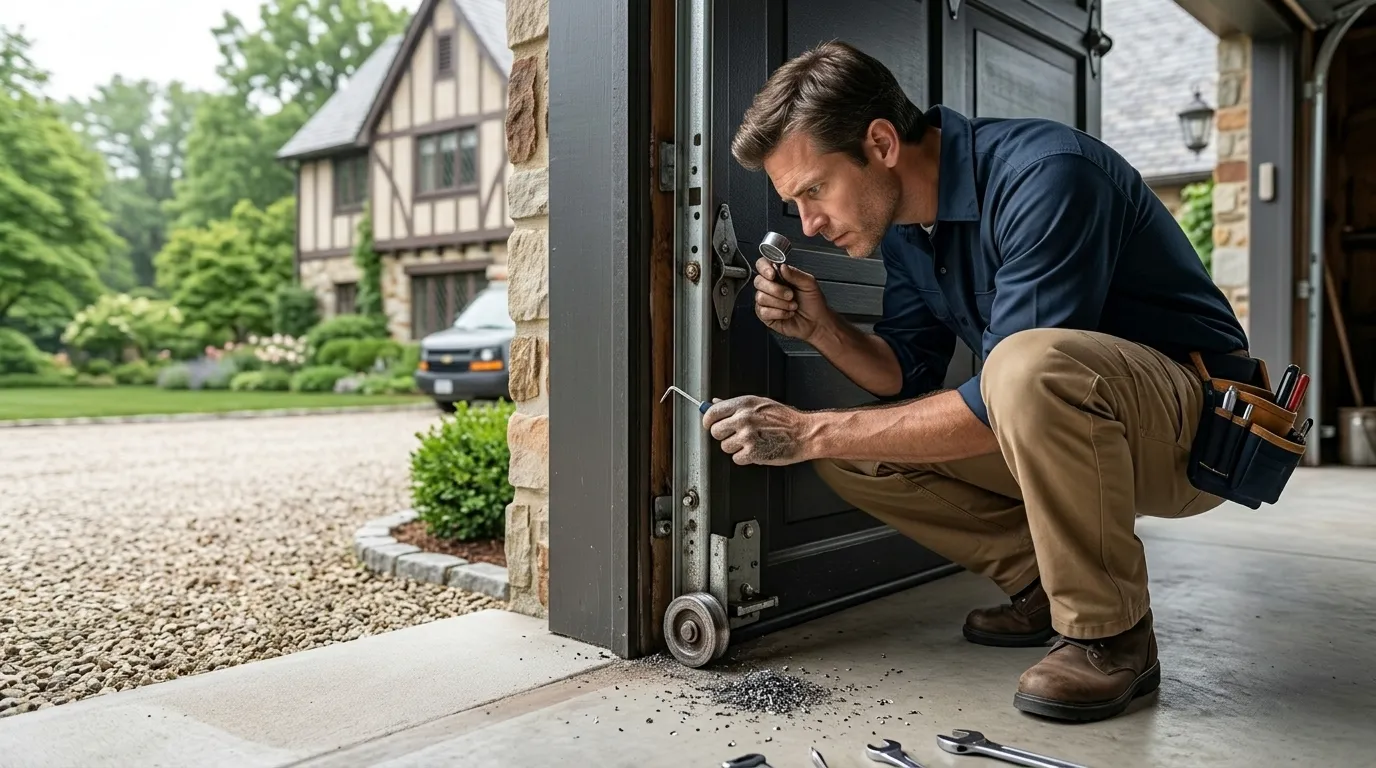
Saginaw sits in a severe cold climate band, and that matters more for an older door than people expect. Cold makes steel brittle and grease stiff, so a spring that's marginal in July snaps in January, usually on the coldest morning of the year when you're already late. Decades of that freeze-thaw cycle work on the weakest point first - the spring, then the rollers, then the track brackets where they bolt to a wood jamb that's shrunk and swelled every winter since it was framed. On a house from the 1960s or 70s, that jamb has done fifty-plus cycles, and the bracket screws are often stripped even if nobody's touched them.
That's a repair, not a reason to replace the whole door. But if the bottom panel has been sitting in slush and salt spray every winter for that same fifty years, rust from the inside out can hollow a panel while the paint still looks fine. That's the difference between a door worth fixing and one that's actually done.
How we work
Where People Go Wrong
The mistake we see most is replacing a whole door because one spring broke, when the spring is a $150-and-up part of a job and the door itself has another decade in it. The opposite mistake happens too - throwing new springs and rollers at a panel that's already rusted through at the bottom, which just delays a bigger failure. Median household income here runs around $68,935, and with roughly 16,915 owner-occupied houses in the service area, most of them built in that same 1952-1994 stretch, we see the same door twice: once for a spring, once a year or two later for the panel it was hiding a problem in.
Get the whole door looked at when you call about one broken part - not upsold, just looked at. The other error is ignoring an opener that's original to a 1970s install. If it's still running on that motor, it's not a question of if it fails, it's when, and usually in the cold.
Questions
Common questions
Is it worth fixing a garage door from the 1960s or 70s instead of replacing it?
Often yes, if the steel panel is still straight and rust-free. Springs, cables, rollers, and tracks are all serviceable parts on an older door. What kills a door for good is rust eating through the bottom panel or steel that's bent from an impact - that's when replacement makes more sense than another repair.
Why did my spring break in the middle of winter?
Cold makes torsion springs more brittle, and Saginaw's winters are severe enough that a spring near the end of its cycle count usually fails on one of the coldest days rather than a mild one. It's not bad luck - it's the last stress a tired spring can take.
How do I know if my door's age is the real problem?
Look at the bottom panel first. If it's solid and the door still tracks straight, age alone isn't a reason to replace it. A lot of doors built during Saginaw's 1960s-70s construction boom are still sound structurally - they just need the moving parts serviced.
Ready when you are
Need a garage door sorted in Saginaw?
Saginaw Garage Door Pros repairs and installs garage doors, springs and openers in Saginaw, MI and the surrounding area.