
Guide
Why Saginaw Springs Break When It's Cold
Saginaw's 1960s-70s door stock and severe cold combine to snap torsion springs in winter. Here's why it happens here and what the repair actually involves.
Local detail
The Cost of This Job
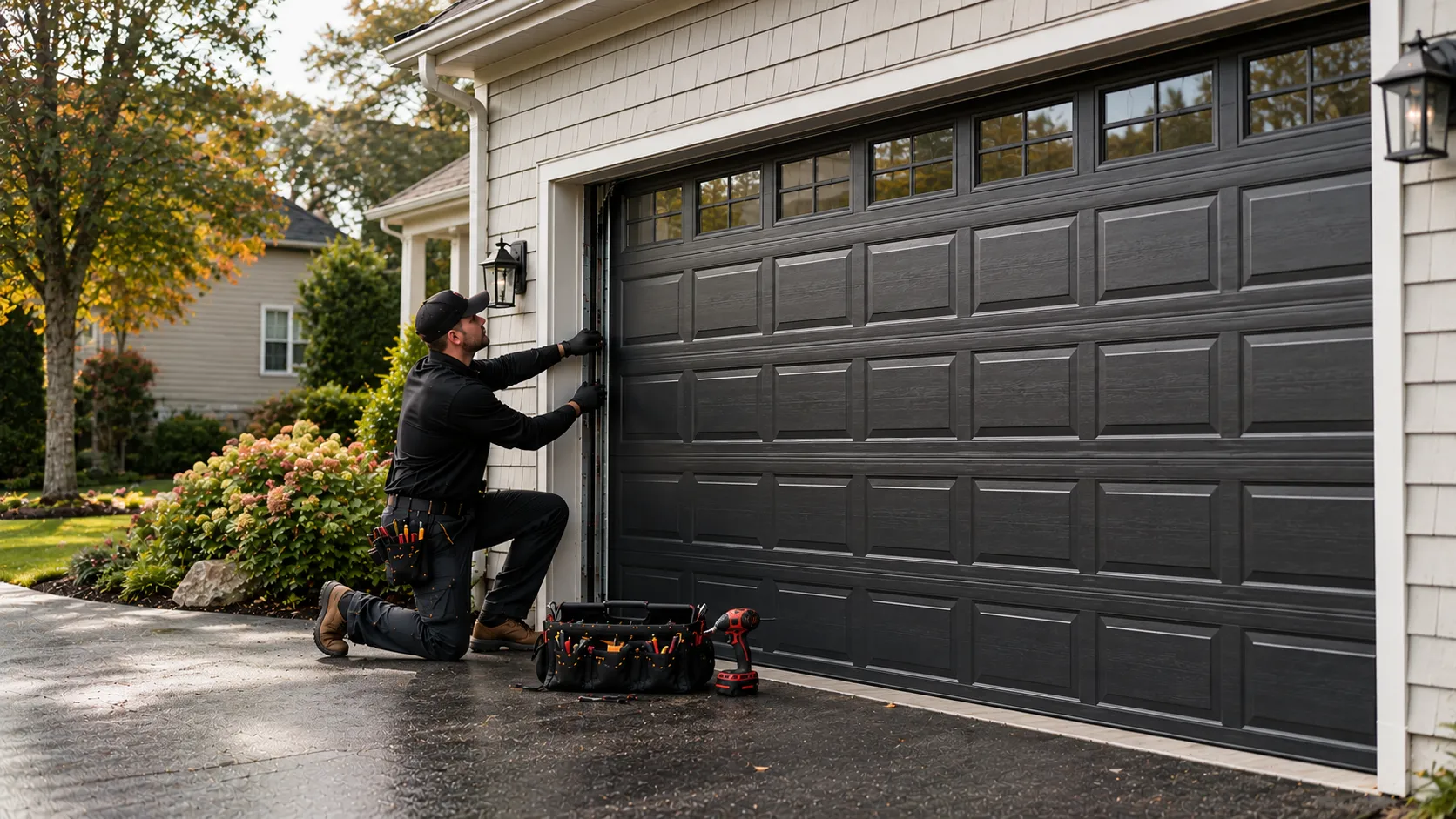
We don't quote a number here because the job changes with what's on the wall. A single torsion spring on a standard door is one repair. A double door with two springs, worn cables, and a rusted-out bottom bracket from thirty winters of road salt is a different job entirely, and on the older doors common across Saginaw's 1960s-70s stock, that's often what we find once the door is open.
What drives the cost on these older homes isn't labor - it's whether the spring size and drum match anything still made. A lot of houses in this area still run original or first-replacement hardware from when the door was installed, sometimes back to the 1952-1994 build window. If the winding cone or shaft diameter is an odd size, we're sourcing a part instead of grabbing one off the truck, and that adds a day, not an hour.
Honest limitation: if the track is bent from the door dropping when the spring let go, or the bottom panel is cracked, fixing the spring alone won't fix the door. We'll tell you straight if you're paying to patch something that needs a full section or a new door instead.
The area
The Situation
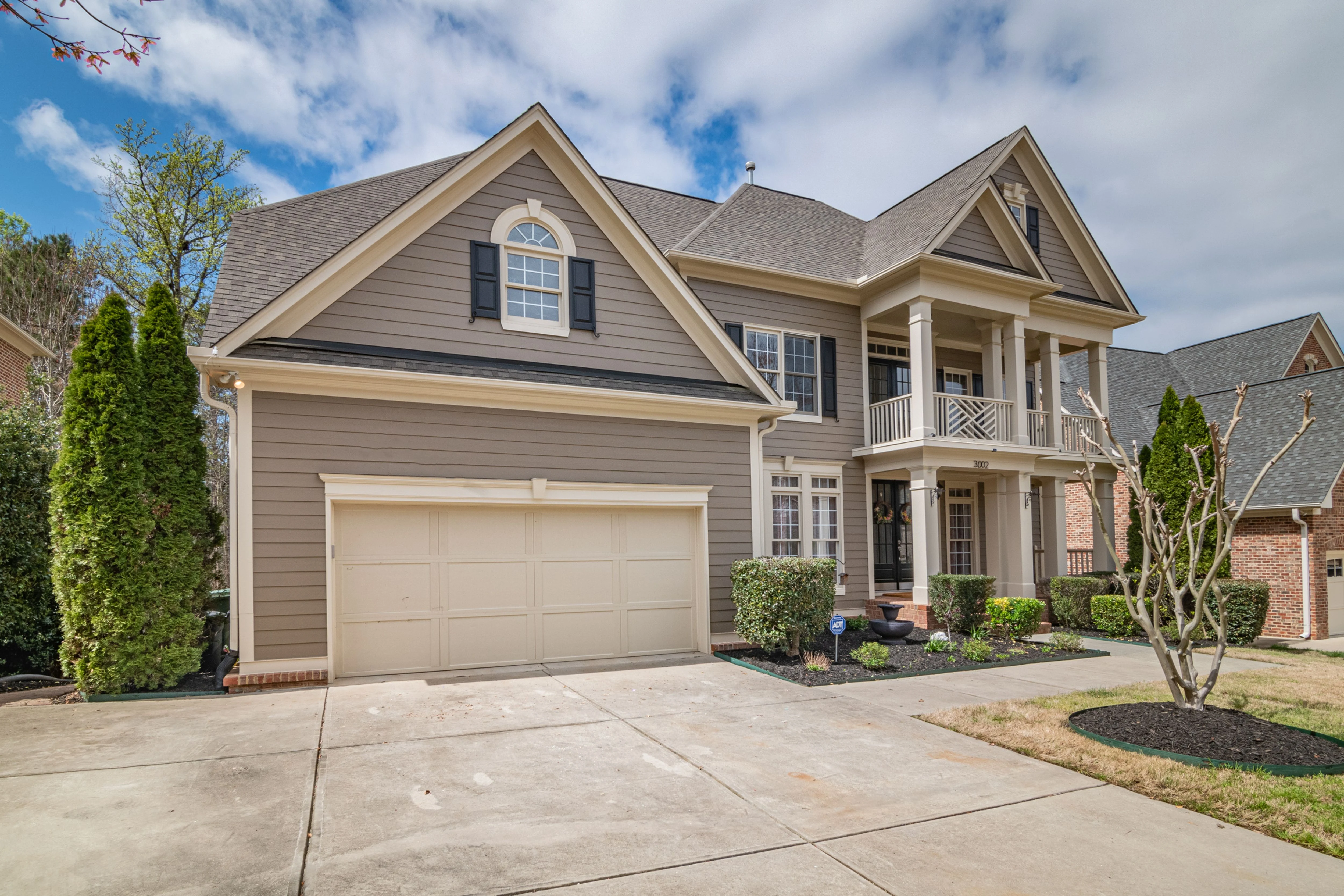
Most of the houses across Saginaw and the surrounding areas - Buena Vista, Zilwaukee, Bridgeport, Shields, and the rest out toward Frankenmuth and St. Charles - went up between 1952 and 1994, with the median right around 1970. That means a huge share of garage doors in this area are running hardware that's either original to a 1960s or 70s build or a like-for-like replacement from years ago.
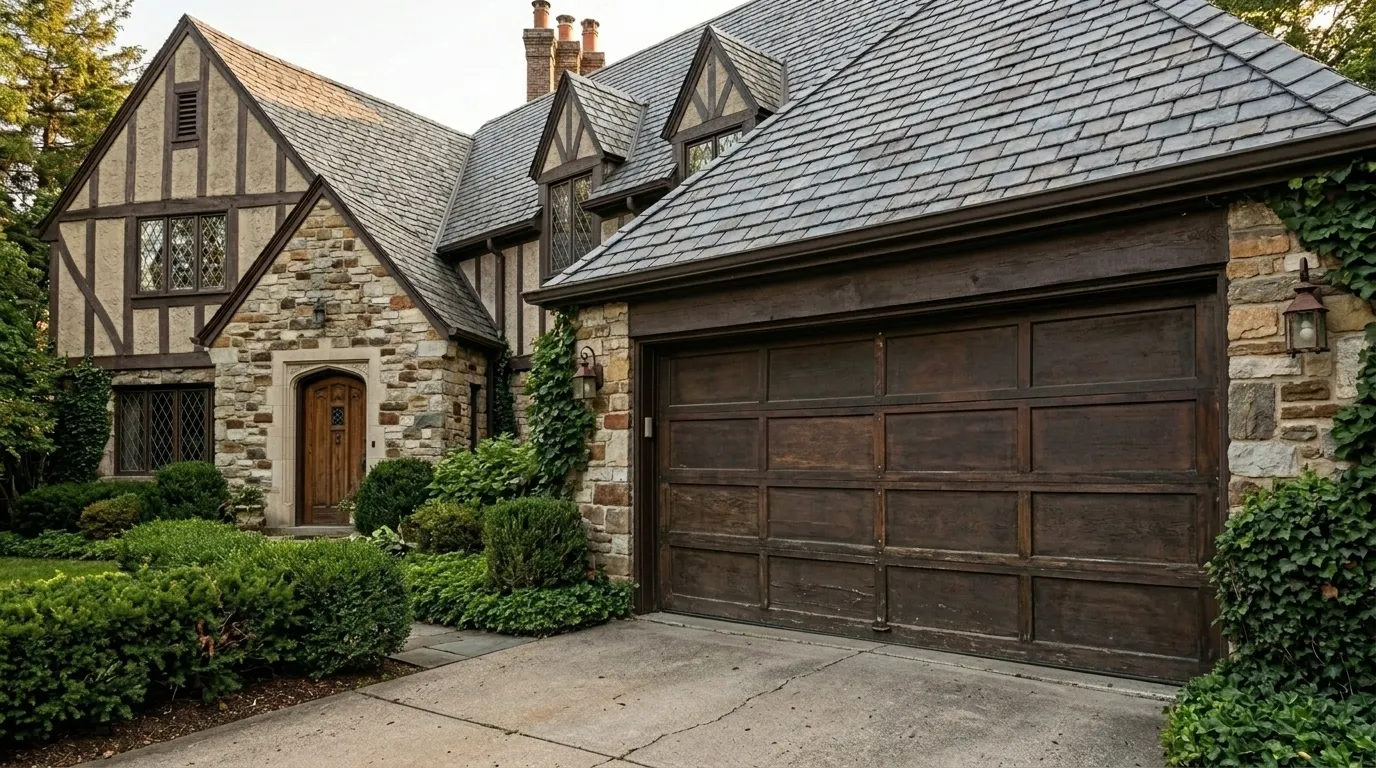
Torsion springs are rated for a number of open-close cycles, not a number of years, but cold makes that count come faster. A spring that's flexed for fifty winters on an original torsion bar is already near the end of its rated life before the cold even factors in. When the temperature drops hard, that's often the day it finally lets go - not because the cold caused the wear, but because the cold is what tips a spring that was already close to done.
This is why we see clusters of spring calls the same week a cold front moves through. It's not coincidence. It's thirty-plus-year-old hardware meeting a stress test it was never going to pass forever.
What we find
What Local Conditions Do
Saginaw sits in a severe cold climate band, and that matters for steel more than most homeowners expect. Torsion springs are wound steel under constant tension, and steel loses some flexibility as it gets cold - it doesn't bend as easily before it breaks. A spring that's been slowly fatiguing for years can handle that stress fine at 60 degrees and snap outright at 10.
The cold also tightens the tracks and stiffens the grease or oil on rollers and hinges, so the opener has to work harder to move the same door. On a spring that's already carrying more load than it should, that extra resistance is often the final push. It's the same reason a lot of failures happen first thing in the morning, when the garage has sat at outside temperature all night and the door gets its first real pull of the day.
We're not saying every spring failure in Saginaw is cold-caused. Plenty fail in July too. But the severe winters here shorten the margin on hardware that's already at the older end of its service life, and that's most of what's on these doors.
How we work
Where People Go Wrong
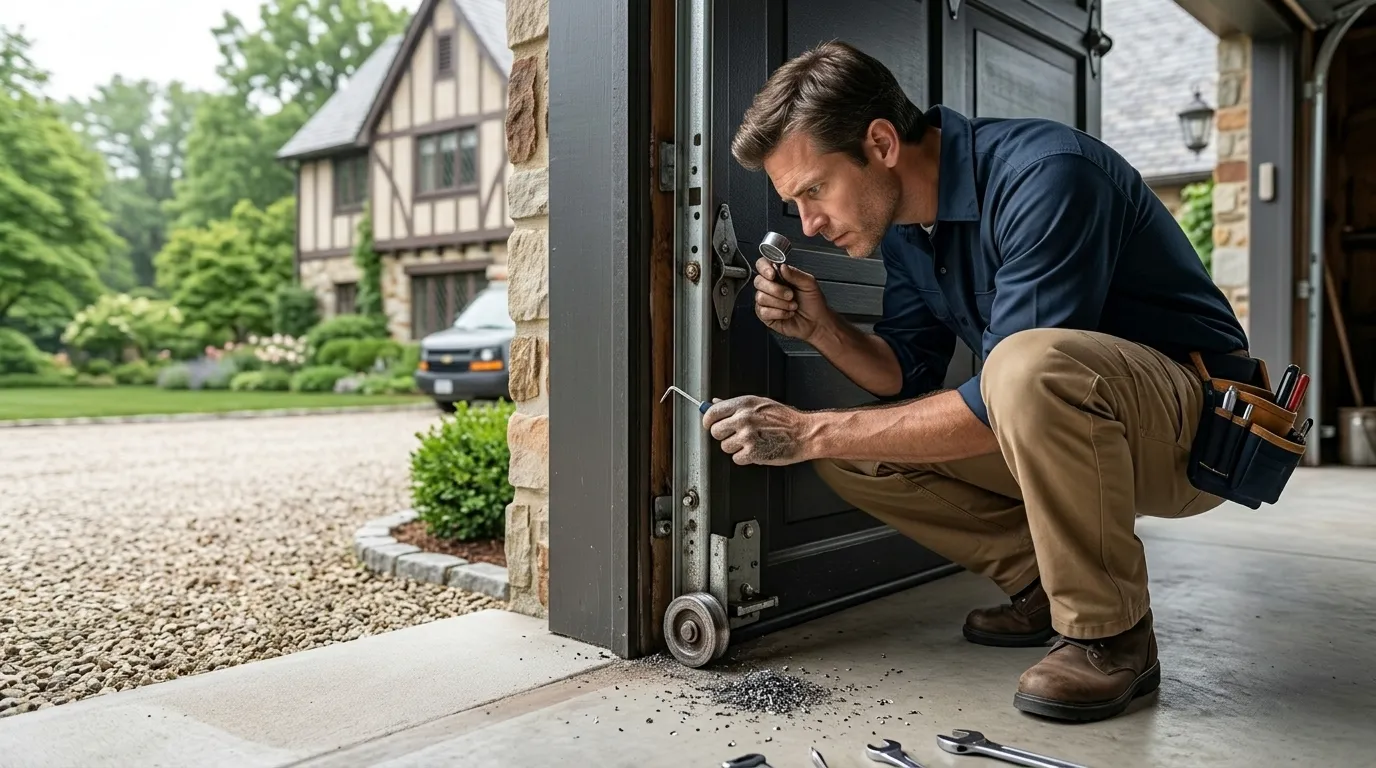
The most common mistake we see is someone hearing the bang of a spring letting go, assuming it's a one-part fix, and trying to order a replacement online without knowing the wind direction, wire size, or shaft length - details that vary more on older, non-standard doors than on newer ones. Get one of those wrong on a torsion system and you've got a mismatched spring under load, which is worse than the broken one.
The second mistake is running the opener anyway once a spring breaks, thinking it'll just be a little louder. Without spring tension, the opener motor is lifting the full weight of the door by itself. On the heavier wood and older steel doors common in this housing stock, that's often how you burn out a motor on top of a $0 spring problem you already had.
The third is ignoring a slow, grinding change in how the door sounds for weeks before it fails. A spring that's fraying or losing coils gives warning signs. In cold weather especially, that's the point to call, not after it snaps.
Questions
Common questions
Why do springs seem to break more in winter here?
Cold steel is less flexible, so a spring that's already fatigued from years of cycling is more likely to snap outright when the temperature drops. Given how much of Saginaw's garage door hardware dates back to the 1960s and 70s, a lot of springs are already close to the end of their life before winter even starts.
Can I replace a torsion spring myself?
We don't recommend it. Torsion springs are under heavy tension and the wind direction, wire gauge, and shaft length have to match your specific door - especially tricky on the older, non-standard hardware common in this area. A mismatched or improperly wound spring is a real injury risk.
Is it worth fixing an old door instead of replacing it?
Depends what else is wrong. If it's just the spring and the track and panels are sound, a repair makes sense. If the door dropped hard and bent the track or cracked a panel, you may be paying repair money toward a door that needs replacing anyway. We'll tell you which situation you're in.
Ready when you are
Need a garage door sorted in Saginaw?
Saginaw Garage Door Pros repairs and installs garage doors, springs and openers in Saginaw, MI and the surrounding area.